
Electricity
Oil and Gas
Energy Use
GHG Emissions
Electricity
From our Energy Futures dataset »
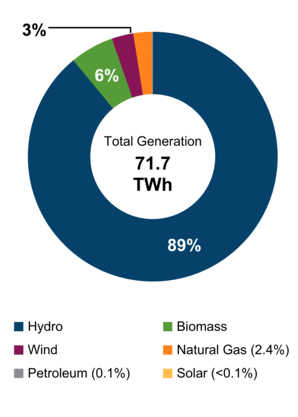
Figure 1: Electricity generation by Fuel Type (2021)
Text Alternative
Text Alternative: This pie chart shows electricity generation by source in B.C. A total of 71.7 TWh of electricity was generated in 2021.
Figure 1: Electricity generation by Fuel Type (2021)
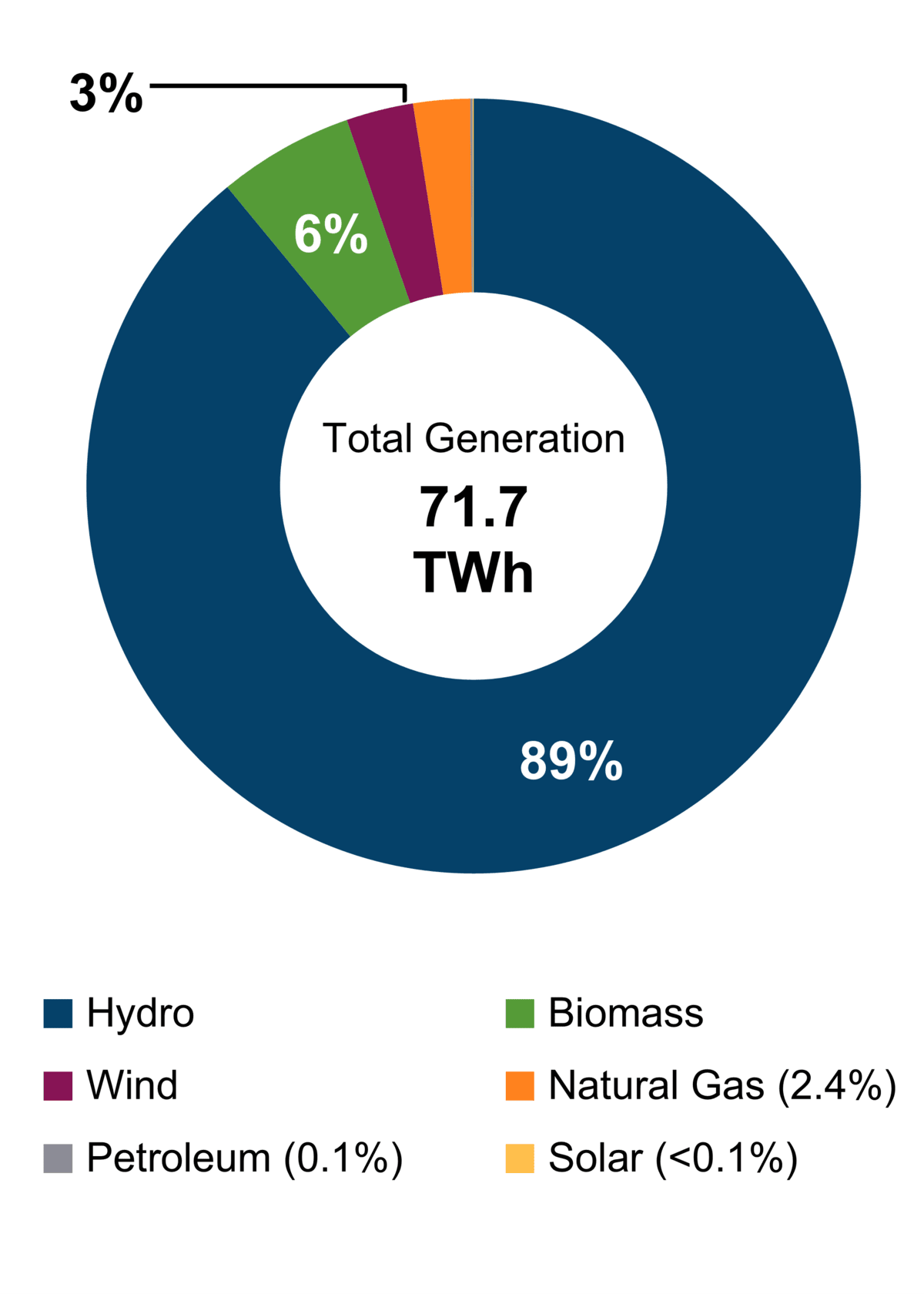
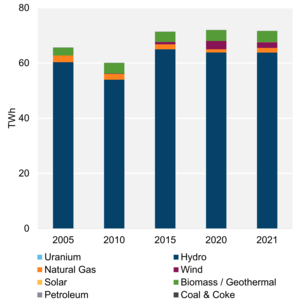
Figure 2: Electricity generation by Fuel Type, Trend (2021)
Text Alternative
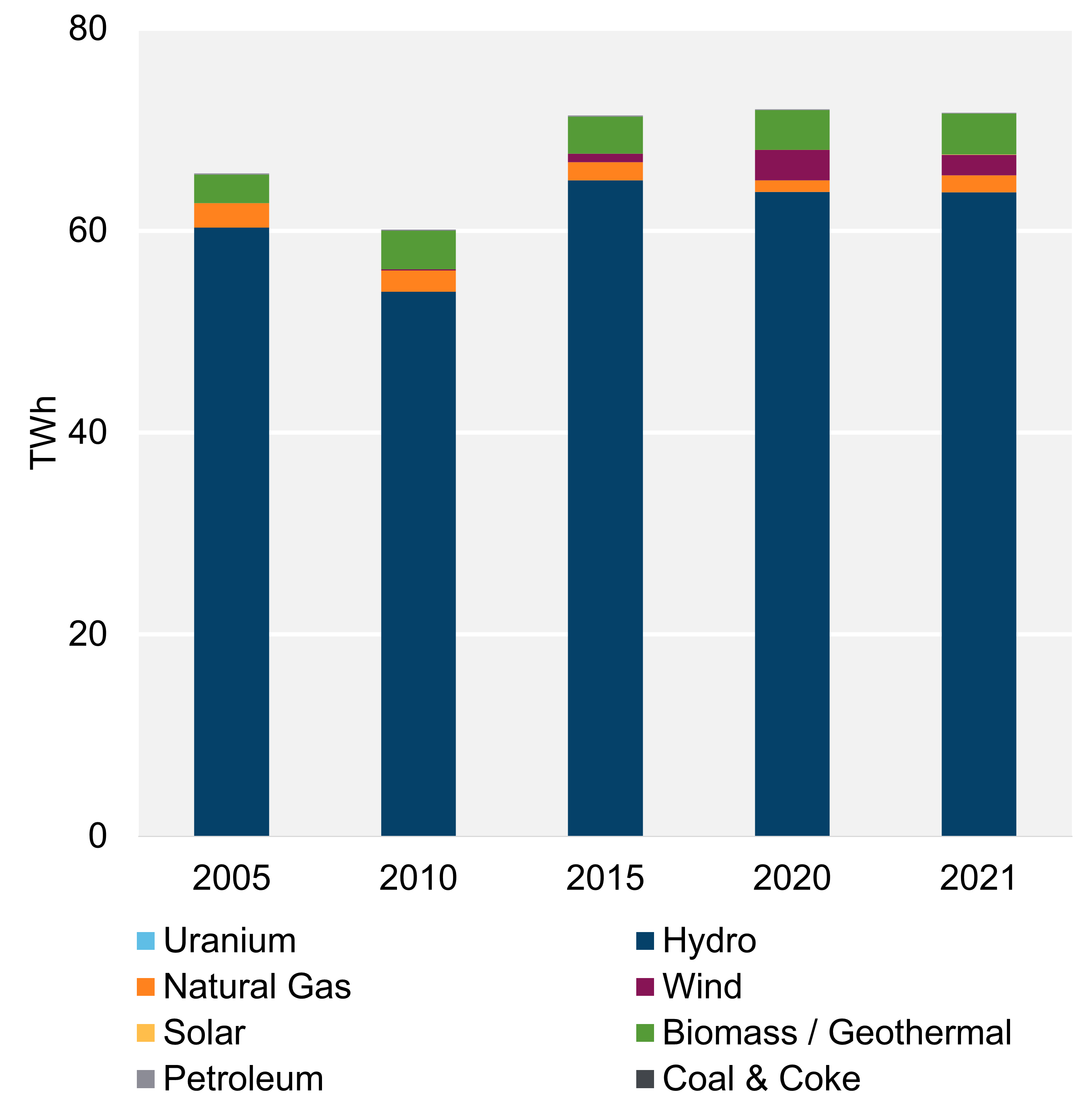
Text Alternative: This chart shows electricity generation by source in British Columbia from 2005 to 2021.
Figure 2: Electricity generation by Fuel Type, Trend (2021)

Connect/Contact Us
Please send comments, questions, or suggestions to
energy-energie@cer-rec.gc.ca
On this page:
Production
- In 2021, B.C. generated 71.7 terawatt-hours (TWh) of electricity (Figure 1), or approximately 12% of Canada’s total generation. B.C. has the fourth highest electricity production in Canada.
- B.C.’s estimated capacity is 18,514 megawatts (MW), the third highest in Canada.
- B.C. has roughly 15,953 MW of hydroelectric capacity, most of which is located on the Columbia River in southeastern B.C. and the Peace River in the northeast. Site C, a new 1,100 MW hydroelectric facility, is currently under construction on the Peace River. The first of six generating units on the Site C project came into operation in October 2024. All generating units are expected to be in service by fall 2025.Footnote 1
- Biomass, which is derived mostly from waste and from B.C.’s extensive forestry industry, accounts for about 5% of B.C.’s electricity capacity.
- Wind accounts for about 4% of B.C.’s electricity capacity. With approximately 702 MW of installed wind capacity, B.C.’s wind capacity is ranked fourth in Canada behind Ontario, Quebec, and Alberta.
- Other sources of power include natural gas, solar, and refined petroleum products (used in off-grid communities).
- BC Hydro, a provincial Crown corporation, generates most of B.C.’s electricity. Independent power producers operate several smaller hydroelectric plants as well as all the biomass, wind, and solar facilities in the province.
Trade and Transportation
- In 2023, B.C.’s net interprovincial and international electricity inflows were 11.2 TWh. On an annual basis, B.C. is typically a net exporter of electricity. B.C. trades primarily with the U.S. and, to a lesser extent, Alberta. However, in 2023, B.C. was a net importer because record low precipitation left some of its hydroelectric reservoirs lower than usual.Footnote 2
- BC Hydro operates over 18,000 km of high voltage transmission lines and underwater submarine cables.Footnote 3 BC Hydro’s transmission lines connect B.C. with other utilities in western North America, including those in Alberta, Washington, Oregon, and California.
- FortisBC operates 7,300 km of transmission and distribution lines in southern B.C.
- In January 2024, the B.C. government announced an update to BC Hydro’s 10-year capital plan, which includes a $36-billion investment on infrastructure projects between 2024-25 and 2033-34.Footnote 4 The plan includes building new transmission lines from Prince George to Terrace, expanding substations to support high-growth areas across the Lower Mainland and Vancouver Island, and upgrading dams and generating facilities.
- Canada and the U.S. signed the Columbia River Treaty in 1961 to manage water flows and downstream flooding in the U.S. The agreement gives the province of B.C. access to an equal share of the benefits of the downstream power that can be generated in the U.S. The Columbia River Treaty is currently being renegotiated to modernize it.Footnote 5
Related data
Energy authorities



Canadian Centre for Energy Information
Search for datasets, visualizations, publications and more at this one-stop virtual shop for independent and trusted information on energy in Canada.
- Date modified: