
YT NT NU BC AB SK MB ON QC NB NL NS PE
On this page:
- Key Takeaways
- Electricity and Renewable Energy Trends
- Recent and Planned Renewable Electricity and Energy Storage Projects
British Columbia
British Columbia (B.C.) is one of the largest producers of renewable energy in Canada. The province has abundant hydroelectric resources that dominate its energy mix, making B.C. one of the lowest-emitting electricity grids in North America. In recent years, B.C. has explored incremental opportunities in wind, biomass, and other renewable technologies to further diversify its energy mix and meet growing demand.
BC Hydro, a Crown corporation, oversees generation, transmission, and distribution across most of the provinceFootnote 1. Fortis BC is also a major electricity producer and provider, operating in B.C.’s southern interiorFootnote 2. Numerous independent power producers (IPPs), including municipalities and First Nations, also supply electricity through a variety of renewable projects. The province’s electricity market is regulated by the British Columbia Utilities Commission (BCUC), and in some instances, municipal governmentsFootnote 3.
Key Takeaways
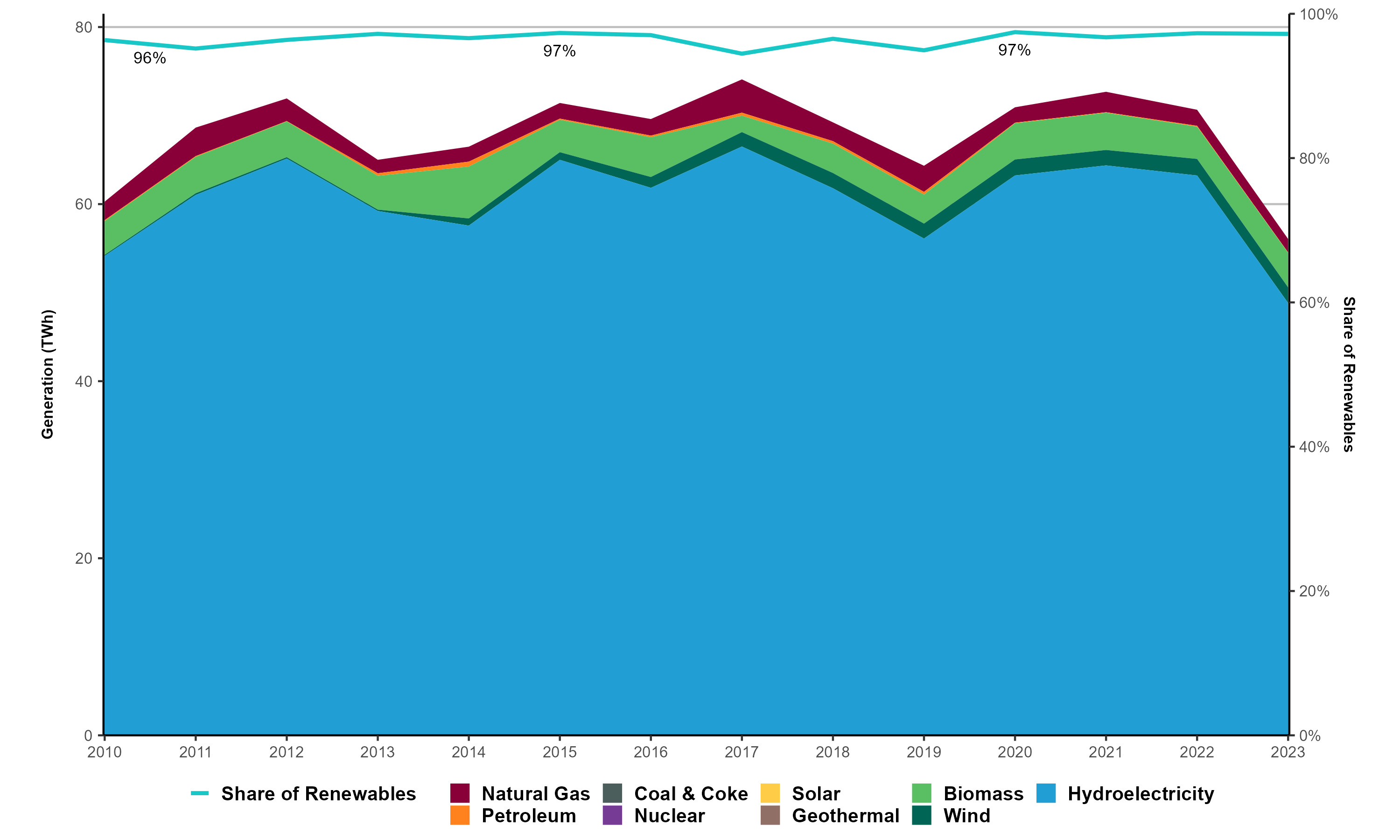
- In 2023, B.C. generated 56.1 terawatt-hours (TWh) of electricity, with 54.5 TWh (97.2%) coming from renewable sources, of which 48.8 TWh (87.1%) came from hydroelectricity.
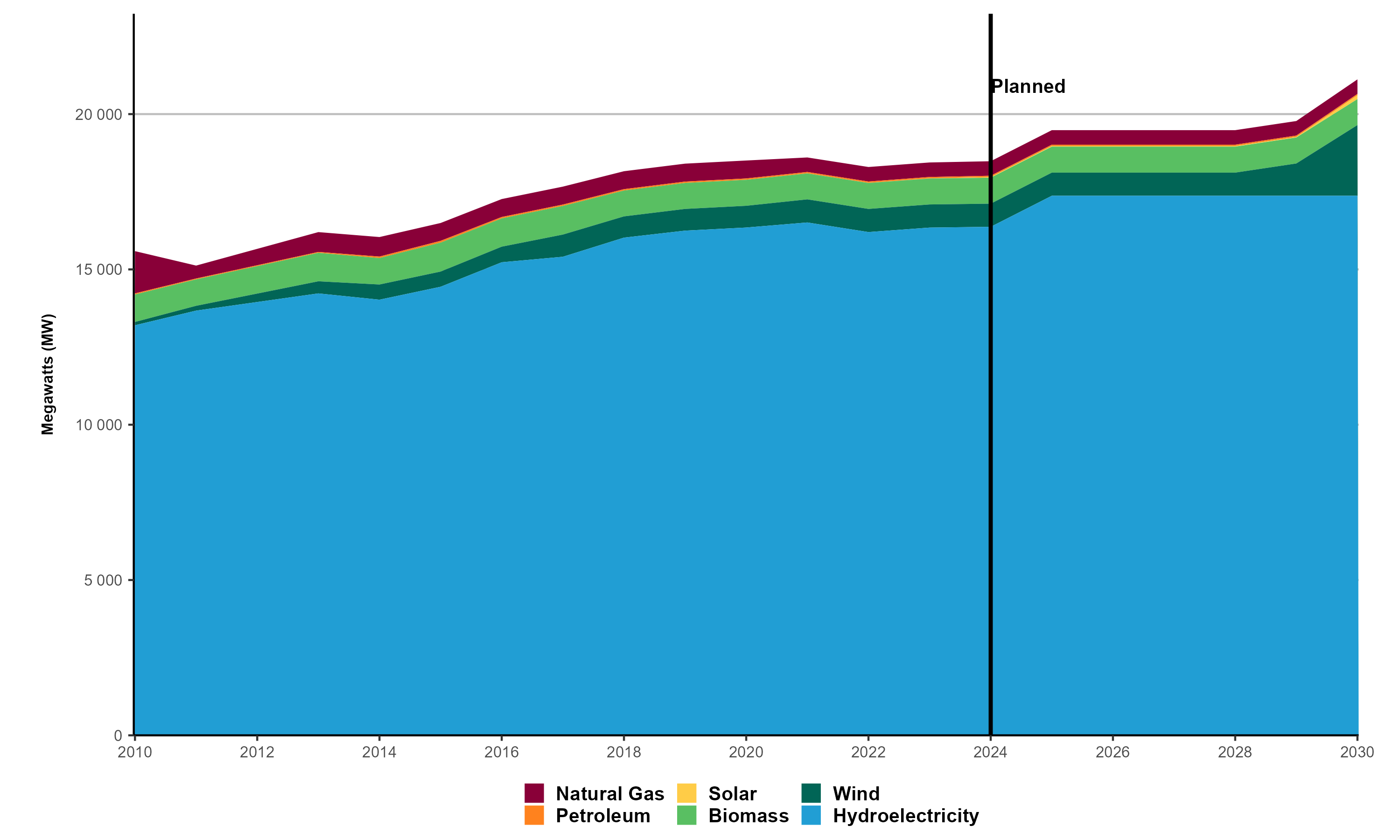
- Renewable capacity grew from 14,192 megawatts (MW) in 2010 to 17,932 MW in 2023, a 26% increase. Most of this growth came from hydroelectricity (3,144 MW), followed by wind (639 MW).
- B.C. leads Canada in solid biofuel production with 174 PJ produced in 2023.
Electricity and Renewable Energy Trends
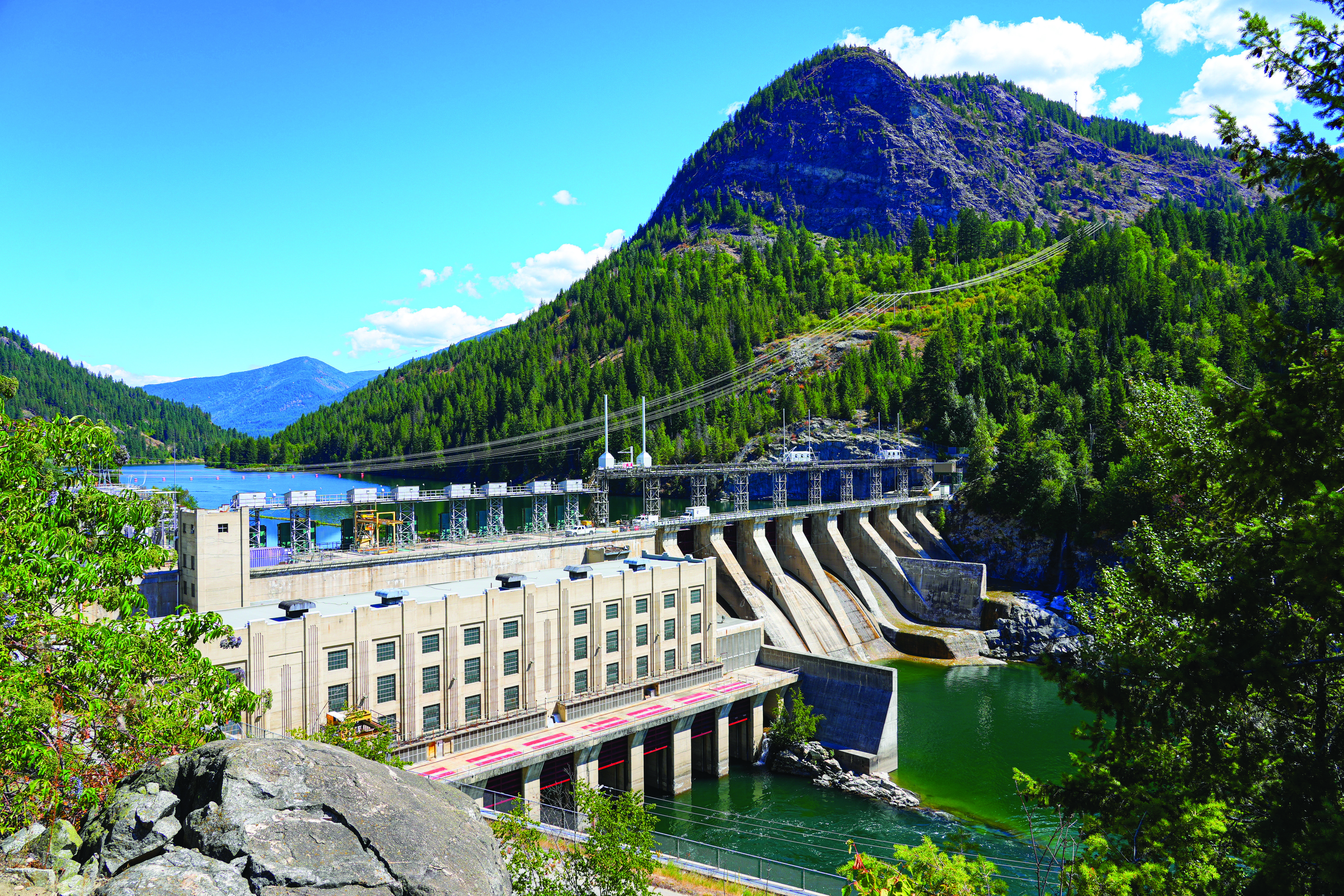
Hydroelectricity accounted for 87% (49 TWh) of B.C.’s electricity generation in 2023. This power came from BC Hydro’s 31 hydroelectric generating stationsFootnote 4, FortisBC’s four facilities on the Kootenay RiverFootnote 5, and the 119 Electricity Purchase Agreements (EPAs) that BC Hydro has with IPPs, which mostly operate run-of-river hydroelectric projectsFootnote 6. B.C.’s hydroelectric system also supports energy trading with neighboring jurisdictions by enabling storage and flexible dispatch, usually exporting when market prices are high, and importing during low-price periods.
A key driver of renewable energy development in B.C. is BC Hydro’s competitive procurement via “calls for power”. The 2025 Call for Power seeks up to 5,000 GWh per year of clean or renewable electricityFootnote 7. Contracts are expected to be awarded by early 2026. The Site C Clean Energy Project—a 1,100 MW hydroelectric station on the Peace River—became fully operational in August 2025 after commissioning its sixth and last generating unit, producing enough electricity in total to power nearly 500,000 homes per yearFootnote 8.
In 2023, Biomass was the province’s second largest source, generating 3.9 TWh (7.0%), mostly from wood waste from the forestry and pulp and paper industries. Wind power generated 1.8 TWh, and solar added 0.007 TWh.
Figures 1 and 2 show historical trends in generation and installed capacity, respectively. Figure 2 also includes planned capacity additions for 2024–2030. The planned portion of the figure may be conservative; additional projects could be announced and come online before 2030 and some projects in the outlook might not proceed.
Figure 1: Electricity Generation by Type in British Columbia, 2010-2023
Source and Text Alternative
Source: The primary source for electricity generation data comes from Statistics Canada. Table 25-10-0020-01, 25-10-0084-01, and 25-10-0028-01 are combined to display data for all categories and years.
Data: Electricity Generation by Type in British Columbia, 2010-2023 [XLSX 21 KB]
Text Alternative: This graph shows electricity generation from 2010 to 2023 in B.C. In 2010, the province’s total generation was 60.3 TWh (96.4% renewable). In 2023, total generation was 56.1 TWh (97.2% renewable). Most generation came from hydroelectricity, followed by biomass, natural gas, and wind.
Figure 2: Electricity Generation Capacity and Planned Capacity Additions in British Columbia, 2010-2030
Source and Text Alternative
Source: The primary source for electricity generation capacity data comes from Statistics Canada. Table 25-10-0022-01 and Table 25-10-0023-01 are combined to display data for all of the categories. It is supplemented by additional project-level data for planned capacity from provincial governments, utilities, and system operators, as well as industry associations.
Text Alternative: This graph shows historical electricity generation capacity from 2010 to 2030 in B.C. In 2010, the province’s total installed electricity capacity was 15,588 MW (91.0% renewable). In 2023, capacity grew to 18,443 MW (97.2% renewable). In 2030, based on planned capacity additions, capacity reaches 21,118 MW (97.6% renewable).
B.C. has 3 MW of utility scale battery energy storage in operation. In 2025, BC Hydro initiated a virtual power plant pilot by installing 200 residential batteries in Sun Peaks and Harrison MillsFootnote 9. These batteries can provide backup power during outages and supply stored energy during peak demand periods.
Distributed solar generation reached 81.3 MW in 2023, supported by BC Hydro programs like net metering (self-generation)Footnote 10 and rebatesFootnote 11Footnote 12. As of January 2025, more than 12,000 customers participated in the net metering program, most with solar PV systems.
B.C. leads Canada in solid biofuel production and use, producing 84 PJ of pulping liquor and 90 PJ of other solid biofuels (e.g., wood residue and wood pellets) in 2023. The province is also a large bioheat producer, in 2023 it had 68 MW of biomass boiler capacity, used to provide heat in community, light industrial, institutional, commercial, and agricultural sectors.
B.C. has a 15% renewable natural gas (RNG) mandate by 2030, with provincial capacity planned to double from around 2 PJ/year in 2024. However, over 80% of the RNG supply is likely to come from outside the province, due to local supply limitations. B.C.’s Low Carbon Fuel StandardFootnote 13 now requires 5% renewable content in gasoline and 8% in diesel by 2030. While the province has some local production capacity, including two biodiesel facilities, one renewable diesel facility, and co-processing capabilities, most ethanol and diesel alternatives are imported.
Recent and Planned Renewable Electricity and Energy Storage Projects
This section highlights selected renewable electricity and energy storage projects in B.C., either recently completed or planned for development between 2025 and 2030. This list is not comprehensive and is based on information available as of September 2025Footnote 14.
- Site C Clean Energy Project – A hydroelectric project owned by BC Hydro, commissioned its sixth and last generating unit in August 2025. In total, Site C has a capacity of 1,100 MWFootnote 15.
- Nithi Mountain Wind Project – A wind project owned by Innergex Renewable Energy Inc. and Stellat’en First Nation, plans to add 200 MW of wind capacity by 2030Footnote 16.
- Stewart Creek Wind Project – A wind project owned by Innergex Renewable Energy Inc. and West Moberly First Nation, plans to add 200 MW of wind capacity by 2029Footnote 17.
- Brewster Wind Project – A wind project owned by Capstone Infrastructure and Wei Wai Kum First Nation, plans to add 197 MW of wind capacity by 2030Footnote 18.
- Highland Valley Wind Project – A wind project owned by Capstone Infrastructure and Ashcroft Indian Band, plans to add 197 MW of wind capacity by 2030Footnote 19.
Additionally, BC Hydro recently issued electricity purchase agreements to 9 wind and 1 solar project in its 2024 Call for PowerFootnote 20, which will add nearly 5,000 GWh per year of new clean or renewable electricity to BC Hydro’s grid. A second request for proposal was issued in July 2025 to acquire up to 5,000 GWh annually of electricity from large, clean or renewable projects.Footnote 21
- Date modified: