
South Bow GP (Canada) Ltd. - Facility Integrity Management CV2627-006
South Bow GP (Canada) Ltd. - Facility Integrity Management CV2627-006 [PDF 1003 KB]
Executive Summary
The Canada Energy Regulator (CER) expects pipelines and associated facilities within the Government of Canada’s jurisdiction to be constructed, operated, and abandoned in a safe and secure manner that protects people, property, and the environment. To this end, the CER conducts a variety of compliance oversight activities, such as audits.
Section 103 of the Canadian Energy Regulator Act (S.C. 2019, c.28, s.10) (CER Act) authorizes inspection officers to conduct audits of regulated companies. The purpose of these audits is to assess compliance with the CER Act and its associated Regulations.
The purpose of operational audits is to ensure that regulated companies have established and implemented both a management system and its associated programs, as specified in the Canadian Energy Regulator Onshore Pipeline Regulations (SOR/99-294) (OPR).
The CER conducted a Facility Integrity Management Operational Audit of South Bow GP (Canada) Ltd. (South Bow or the company) between 1 April 2026 and 16 July 2026.
The objective of the Facility Integrity Management Audit is to assess whether the company’s Integrity Management Program as applied to facilities is adequate to avoid and control events which could potentially cause harm to people, property, or the environment. The company’s Integrity Management Program, as applied to facilities, was assessed in accordance with selected requirements of the OPR in the areas of:
- Management of change;
- Hazards identification, risk assessment, and controls;
- Hazard and incident reporting, and taking corrective and preventative actions;
- Inspection and monitoring; and
- Integration with the company’s management system.
Of six (6) audit protocols, four (4) were deemed to have no issues identified and two (2) were found to be non-compliant. The findings were related to whether South Bow's established risk assessment and controls-related processes were clearly documented, integrated, and applied within the Facility Integrity Management Program.
Within 30 calendar days of receiving the Final Audit Report, the company shall file with the CER a Corrective and Preventive Action Plan that outlines how the non-compliant findings will be resolved. The CER will monitor and assess the implementation of this Corrective and Preventive Action Plan to confirm that it is completed in a timely manner.
Note that all findings are specific to the information assessed at the time of the audit as related to the audit scope.
While non-compliant findings exist, the CER is of the view that the company can still construct, operate, and abandon pipelines in a manner that will preserve the safety of persons, the environment, and property.
The Final Audit Report will be made public on the CER website.
Table of Contents
- Executive Summary
- 1.0 Background
- 2.0 Objective and Scope
- 3.0 Methodology
- 4.0 Summary of Findings
- 5.0 Discussion
- 6.0 Conclusion
- 7.0 Next Steps
- Appendix 1: Audit Assessment
- Appendix 2: Terms and Abbreviations
List of Tables and Figures
1.0 Background
1.1 Introduction
The CER expects pipelines and associated facilities within the Government of Canada’s jurisdiction to be constructed, operated, and abandoned in a safe and secure manner that protects people, property, and the environment.
Section 103 of the CER Act authorizes inspection officers to conduct audits of regulated companies. The purpose of these audits is to assess compliance with the CER Act and its associated Regulations.
The purpose of operational audits is to ensure that regulated companies have established and implemented both a management system and its associated programs, as specified in the OPR.
The CER conducted a Facility Integrity Management Operational Audit of South Bow between 1 April 2026 and 16 July 2026.
1.2 Description of Audit Topic
The OPR requires that companies have an Integrity Management Program for its pipelines and associated facilities. The objective of Facility Integrity Management is to provide operating companies with a formalized mechanism to maintain the integrity of the managed assets that demonstrates a commitment to protect the health and safety of employees, the public, and the environment. Integrity management for a facility aims to ensure safe operation by preventing failures that could result in the release of product.
Facility Integrity Management encompasses a wide range of equipment like pumps, prime movers, tanks, pressure vessels, piping systems, electrical components, and instrumentation within the boundaries of the facility. Risk assessment is a crucial aspect of integrity management and for a facility one must consider complex interactions between different equipment and the various components within that equipment and potential cascading failures.
The CER’s expectations for this audit are explained in Appendix 1.
1.3 Company Overview
South Bow is an oil and liquids pipeline infrastructure company. South Bow Corporation was formed and launched as an independent, publicly traded entity in 2024, through a corporate spinoff from TC Energy Corporation. Its 4,900 kilometers of pipeline and 33 pump stations titled The Keystone Pipeline System connects western Canadian crude oil supplies to refining markets in the United States Midwest and Gulf Coasts. The Canadian portion of the Keystone pipeline runs from its storage tanks in Hardisty, Alberta, east across Saskatchewan and Manitoba, before turning south and crossing the Canada-United States border near Haskett, Manitoba into North Dakota. The storage tank farm in Hardisty has the third largest capacity of all the storage tank facilities regulated by the CER. The Keystone pipeline’s engineered design capacity is 591 thousand barrels per day.
The map below depicts the company’s CER-regulated assets.
Figure 1. Map of Company’s CER Regulated Assets
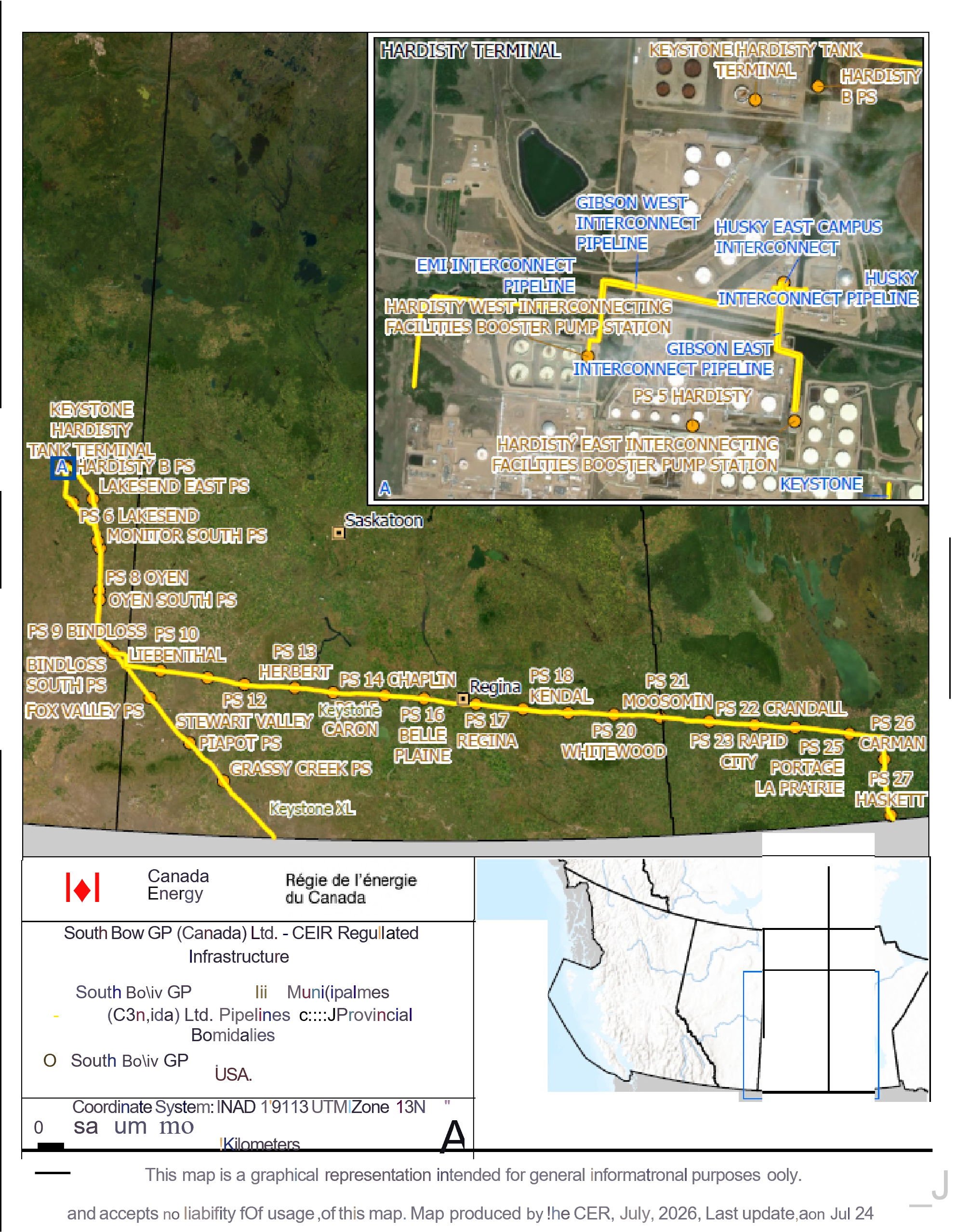 Figure 1. Map of Company’s CER Regulated Assets
2.0 Objective and Scope
The objective of the Facility Integrity Management Audit is to assess whether the company’s Integrity Management Program, as applied to facilities, is adequate to avoid and control events which could potentially cause harm to people, property, or the environment. The company’s Integrity Management Program, as applied to facilities, was assessed in accordance with selected requirements of the OPR in the areas of:
- Management of change;
- Hazards identification, risk assessment, and controls;
- Hazard and incident reporting, and taking corrective and preventative actions;
- Inspection and monitoring; and
- Integration with the company’s management system.
The table below outlines the scope selected for this audit.
Table 1. Audit Scope
Audit Scope |
Details |
|---|---|
Audit Topic |
Facility Integrity Management |
Lifecycle Phases |
x Construction
x Operations
x Abandonment
|
Section 55 Programs |
x Integrity Management
|
Time Frame |
Open |
3.0 Methodology
An audit notification letter was sent to the company on 30 March 2026 advising the company of the CER’s plans to conduct an operational audit. The lead auditor provided the audit protocol and initial information request to the company on 3 April 2026 and followed up on 10 April 2026 with a meeting with company staff to discuss the plans and schedule for the audit. Document review began on 12 May 2026 and interviews were conducted during the week of 1 June 2026. Inspections were conducted during the week of 8 June 2026.
The auditors assessed compliance through:
- document reviews;
- record sampling;
- interviews; and
- inspections.
The purpose of the document review is to identify the suite of documents that are intended to meet the requirements related to the audit protocols. This review assesses whether the process is established. Interviews are then conducted to determine the extent to which the processes have been implemented. If the responses are consistent with what is written, it is an indication that company staff are aware of the process, and that it is being followed. One set of interviews was conducted primarily with management and senior staff. A second set of interviews was conducted with field staff during an on-site inspection. A total of five (5) interview sessions were conducted.
Records are also sampled to assess whether the process is implemented. Records are outputs, or products of a process. The presence of properly completed records suggests that the process is being used.
The CER audit team used a stratified sampling approach in which the team asked for additional documents and records based on specific characteristics defined by the audit criteria and the type of activity being conducted. The team reviewed the company's responses to the initial information request and then asked for specific additional documents and records based on what the company had stated in its response. For example, where South Bow stated that it conducts a number of different types of inspections at its facilities, the team asked for documented evidence for each type of activity including the procedure, the template to be completed by the technician, and an example of a recently completed inspection. Where the company stated that it had carried out, or was in the process of completing, a change through its Management of Change (MOC) process at a particular facility, the team asked for documented evidence.
In total, the CER reviewed approximately 120 documents and records. The list of documents reviewed, records sampled, and the list of interviewees are retained on file with the CER.
Site inspections also help auditors assess whether the process is implemented. They allow the auditor to talk with frontline staff, to make observations of site conditions, and to determine if the steps written in the process are being carried out in the field. While the inspection of one site had to be cancelled due to severe weather conditions, the auditors were able to complete an inspection at a second site – the Hardisty Terminal Complex in Alberta.
For this audit, the audit team consisted of two auditors from the CER’s audit team and two engineers from the CER’s Pipeline Integrity Team, serving as subject matter experts.
In accordance with the established CER audit process, the lead auditor shared a pre-closeout summary of the audit results with South Bow personnel on 26 June 2026. At that time, the company was given an additional week to provide any supporting documents or records that it believed would help resolve any identified gaps in information or compliance. After the pre-closeout meeting, the company provided a written response to the CER with South Bow’s perspective on the assessments. The audit team reviewed the company’s comments and took them into consideration when making its final assessment of compliance. The lead auditor conducted a final close out meeting with the company on 16 July 2026.
4.0 Summary of Findings
The lead auditor has assigned a finding to each audit protocol. A finding can be either:
- No Issues Identified – No non-compliances were identified during the audit, based on the information provided by the company and reviewed by the auditor within the context of the audit scope; or
- Non-compliant – The company has not demonstrated that it has met the legal requirements. A Corrective and Preventive Action Plan shall be developed and implemented to resolve the deficiency.
All findings are specific to the information assessed at the time of the audit, as related to the audit scope.
The table below summarizes the findings. See Appendix 1: Audit Assessment for more information.
Table 2. Summary of Findings
| Audit Protocol (AP) Number | Regulation | Regulatory Reference | Topic | Finding Status | Finding Summary |
|---|---|---|---|---|---|
AP-01 |
OPR |
6.5(1)(i) |
Management of Change |
No Issues Identified |
South Bow demonstrated through document and record review, interviews, and on-site inspections that it is meeting the expected outcomes to meet the regulatory requirements of paragraph 6.5(1)(i) of the OPR. |
AP-02 |
OPR |
6.5(1)(c) |
Hazard Identification |
No Issues Identified |
South Bow demonstrated through document and record review, interviews, and on-site inspections that it is meeting the expected outcomes to meet the regulatory requirements of paragraph 6.5(1)(c) of the OPR. |
AP-03 |
OPR |
6.5(1)(e) |
Risk Assessment |
Non-compliant |
South Bow has established a Risk Management Process that provides a methodology for evaluating and managing risk, including defined risk tolerance, and acceptance criteria. However, the reviewed evidence did not clearly demonstrate how that methodology and those criteria are applied and integrated within the Facility Integrity Management Program (FIMP) to evaluate and manage all identified facility-integrity hazards. |
AP-04 |
OPR |
6.5(1)(f) |
Controls |
Non-compliant |
While South Bow has several processes that address aspects of control development and implementation, the reviewed evidence does not demonstrate a clearly integrated, developed, and implemented Facility Integrity Controls methodology that traces AP-02 hazards and AP-03 risks to specific controls, owners, acceptance criteria, implementation records, verification methods, evidence of effectiveness, and communication records for persons exposed to the risk. |
AP-05 |
OPR |
6.5(1)(r) |
Hazard & Incident Reporting and Response |
No Issues Identified |
South Bow demonstrated through document and record review, interviews, and on-site inspections that it is meeting the expected outcomes to meet the regulatory requirements of paragraph 6.5(1)(r) of the OPR. |
AP-06 |
OPR |
6.5(1)(u) |
Inspection and Monitoring |
No Issues Identified |
South Bow demonstrated through document and record review, interviews and on-site inspections that it is meeting the expected outcomes to meet the regulatory requirements of paragraph 6.5(1)(u) of the OPR. |
5.0 Discussion
While integrity management for a pipeline and a facility both aim to ensure safe operation by preventing failures, the key differences between the two lies in the specific components and risks assessed.
Pipeline integrity management encompasses threats specific to pipelines, whereas facilities integrity management encompasses threats specific to facilities, which may not be entirely the same, as facilities have a wider range of equipment like pumps, prime movers, tanks, pressure vessels, piping systems, electrical components, and instrumentation within the boundaries of the facility. It also encompasses wider potential failure modes.
Risk assessment is a crucial aspect of integrity management and for a facility, one must consider complex interactions between different equipment and the various components within that equipment and potential cascading failures.
South Bow pipeline assets are governed by the South Bow Management System (SBMS). The SBMS was developed and operational on 1 August 2024 in advance of TC Energy separating its liquids pipelines business into South Bow.
The programs, processes, and procedures that make up the SBMS are all part of the company’s controls to manage its hazards and risks. The SBMS describes senior management’s support for the management system. It lays out the various programs, which it refers to as threat management programs, that make up the management system, the elements that are applicable to the programs and the 19 management system processes.
Of the programs that make up the SBMS, the CER audit team was primarily concerned with its Asset Integrity Management Program, which clearly explains that it is applicable to:
- Pipeline Integrity Management;
- Facility Piping Integrity Management; and
- Facility Equipment Integrity Management.
A sub-program of the Asset Integrity Management Program is the FIMP.
The company has an Operations Committee Charter that details the governance committee in place to oversee management system performance. The Management System Register is a document that lists the South Bow personnel assigned management system roles. Each process document lists the roles and responsibilities for the various activities associated with the process.
The governance section of the SBMS details accountabilities, roles, and responsibilities for the design, establishment, and implementation of the threat management programs and the management system processes each program is required to follow.
The SBMS states that the threat management programs are to be specifically designed to address the threats and hazards that the company can expect to encounter. Each threat management program is to identify, assess, respond to, and mitigate risks areas inherent in hazardous pipeline lifecycle management.
During this audit, South Bow indicated that the ten threat management programs have been designed to meet the requirements of the section 55 programs required by the OPR.
At the Hardisty Terminal Complex, the CER inspectors conducted a walk-around and witnessed South Bow carrying out a facility integrity general site piping inspection. This included an inspection of the Electric Service Building and six pumps, two of which were operating at the time. It also included facility piping, manifold, sumps, and containment facilities. The inspection also included a review of records, facility safety and security briefings, and a review of site-specific hazards and controls. The auditors interviewed site staff on issues such as training in general, site-specific training, competency reviews, reporting hazards and incidents, familiarity with the inspection and monitoring process, and the management of change process.
The full details and results of the facility inspection are contained in the Inspection Officer’s Report for Compliance Verification Activity 2627–153 retained on file by the CER. No issues of concern were noted during the inspection.
In 2025, the CER administered an implementation assessment (Compliance Verification Activity 2526–155) with South Bow to assess how well the company was managing the change from being a part of TC Energy to becoming the independent entity, South Bow. The company was able to demonstrate that it was using its MOC process to manage the hazards and risks associated with the transition, with completion targeted for the end of 2027. The audit team reviewed the company’s MOC plan and reviewed the CER’s implementation assessment report.
During the audit, it was evident that South Bow was in the process of migrating and transitioning some TC Energy documents to align them with South Bow’s processes and activities. The company was also in the process of drafting new process documents, procedures, and standards where required. The CER audit team noted a number of deficiencies in the company’s documentation, which the company indicated it was aware of, and has plans to rectify. Since the company already had a plan in place to rectify the deficiencies under the umbrella of the MOC, the audit team considered this information in making its compliance assessment.
However, there were a few issues of concern noted by the audit team that are considered outside the scope of the MOC and those form the basis of the non-compliances noted in this report.
6.0 Conclusion
In summary, the CER conducted an operational audit of South Bow related to facility integrity management. Out of a total of six (6) audit protocols, four (4) were classified as no issues identified. The findings were related to the company not having clearly articulated and explicit processes for risk assessments and implementing controls. Detailed assessments are shown in Appendix 1. South Bow is expected to resolve these deficiencies through the implementation of a Corrective and Preventive Action Plan. The CER will monitor and assess the implementation of this Corrective and Preventive Action Plan and issue an audit closeout letter upon its completion.
7.0 Next Steps
The next steps of the audit process are as follows:
- Within 30 calendar days of receiving the Final Audit Report, the company shall file with the CER, a Corrective and Preventive Action Plan that outlines how the non-compliant findings will be resolved.
- The CER will monitor and assess the implementation of the Corrective and Preventive Action Plan to confirm that it is completed:
- on a timely basis; and
- in a safe and secure manner that protects people, property, and the environment.
- Once implementation is completed, the CER will issue an audit closeout letter.
7.0 Next Steps
Appendix 1: Audit Assessment
AP-01 Management of Change
Finding Status |
No issues identified |
Regulation |
OPR |
Regulatory Reference |
6.5(1)(i) |
Regulatory requirement |
A company shall, as part of its management system and the programs referred to in section 55, |
Expected Outcome |
It is expected that the company can demonstrate that:
|
Relevant information provided by the company |
The following key documents and records are related to this finding:
The following interviewees were interviewed related to this assessment:
|
Finding Summary |
South Bow demonstrated through document and record review, interviews, and on-site inspections that it is meeting the expected outcomes to meet the regulatory requirements of paragraph 6.5(1)(i) of the OPR. |
Detailed Assessment
Element 4 - Operational Controls of the SBMS is intended to address the requirements of paragraph 6.5(1)(i) of the OPR. Element 4 refers to the company’s MOC Process. The process has been approved by management, provides a purpose and scope, has process steps, roles and responsibilities, references, and document revision and control. Competency and training requirements for this process are addressed in the company’s Competency and Training Process document.
The MOC Process document outlines a structured approach to manage changes that have the potential to impact the health, safety, security, environment, and operational integrity of its assets, and/or business performance. It states that its purpose is for permanent or temporary modifications and includes emergency changes.
The MOC Process is to be used to address organizational changes, legal, document, and technical and physical changes and must be implemented when any change could impact safety, integrity, or operations. The process document contains a table which discusses the various types of changes managed at South Bow and the procedure to be followed.
South Bow’s Organizational Change Procedure details how changes to the organizational structure that affect governance, accountabilities, and responsibilities and accountabilities for the SBMS, Threat Programs, and the Element Processes are to be managed.
Its Organizational Change Procedure is applicable to changes in the organization at the facility level. As such, changes to positions such as roles and responsibilities of the facility engineer or the facility supervisor are to be managed through this process.
The Controlled Document Management of Change Procedure requires that all changes to specifications, standards, or procedures (including creating a new document, revising existing documents, or requesting a variance), are identified, reviewed and implemented using this procedure. This document is to be used to manage controlled documents within the Controlled Document Library. At the facility level, South Bow advised the CER auditors that its operating and maintenance procedures are controlled documents.
South Bow indicated that currently its Controlled Document Library continues to be configured and refined following the company’s separation from TC Energy in 2024. In the interim, until this is fully accomplished, employees are required to complete Controlled Document Interim Document Change Training.
The requirement to manage existing, new and impending regulatory requirements is captured in the SBMS Element 1 – Leadership and Commitment. Changes to existing regulatory requirements are managed through the Commitment & Compliance Management Process. Any changes to documentation as a result of a regulatory change are taken care of through the Controlled Document Process.
The Operations Technical & Physical MOC Procedure is used for all changes to technology, software, equipment, facilities, assets, and the way they are operated, which includes operating procedures. The Technical & Physical MOC procedure is used to develop implementation plans, identify hazards, and evaluate risks associated with the proposed change. The procedure also requires verification that changes have been completed in accordance with the implementation plan. It goes into detail on who can fulfil the various roles. It also indicates that the MOC is to be entered into the company’s computerised maintenance management system.
The MOC Process document includes a flow diagram that shows the various steps of the process and who is responsible for each. There are four levels of responsibility:
- Change Originator
- Reviewer(s)
- Approver
- Change Implementor
The five steps of the MOC process are:
- Identify
- Define & Evaluate
- Approve
- Implement
- Review, Close, & Communicate
The company also demonstrated that training is provided to its personnel on the use of the MOC Process and associated procedures.
Areas considered to be out of scope for the MOC Process include minor adjustments or routine operational changes that are permitted by existing engineering controls or are considered normal job functions. These include routine maintenance tasks, setpoint changes permissible by the control system or minor equipment adjustments.
Within the FIMP, the way changes are to be managed is described in Section 9.0. Design changes are to follow the South Bow MOC Process and the Technical & Physical MOC Procedure. Greenfield projects are to follow the Project Design Management of Change Procedure. Integrity and Maintenance Projects are to use the South Bow Project Delivery Process.
The hazards and risks associated with any proposed change are evaluated as part of the initial step using a variety of different procedures and screening tools, depending on the hazards and risks associated with the change.
Interviews were conducted with management and senior staff at South Bow's corporate office in Calgary and with field staff during an on-site inspection. South Bow provided the CER auditors with MOC documents and records and examples of MOCs to demonstrate that the process has been implemented. The company also demonstrated its dashboard that it uses to keep track of the progress of MOCs.
Also of note, in its transition from TC Energy to South Bow, the company demonstrated that it is following its MOC process to manage all of the hazards and risks associated with this undertaking, which include change in ownership, organization, legal requirements, roles and responsibilities, and accountabilities, and documentation.
Overall, South Bow demonstrated through document and record review, interviews, and on-site inspections that it has established and implemented a process for managing change. It has defined methods for identifying and managing various types of changes. It has processes and procedures to address changes to documentation, design, specifications, standards, and procedures. It also demonstrated that it has procedures for dealing with changes to ownership, its organization, to the management system, and to legal requirements. These include changes at the facility level. In each change management procedure, the company evaluates the risks associated with the change, and develops appropriate controls.
In summary, South Bow demonstrated through document and record review, interviews, and on-site inspection that it is meeting the expected outcomes to meet the regulatory requirements of paragraph 6.5(1)(i) of the OPR.
AP-02 Hazard Inventory
Finding Status |
No issues identified |
Regulation |
OPR |
Regulatory Reference |
6.5(1)(c) |
Regulatory Requirement |
A company shall, as part of its management system and the programs referred to in section 55, (c) establish and implement a process for identifying and analyzing all hazards and potential hazards. |
Expected Outcome |
It is expected that the company can demonstrate that:
|
Relevant Information Provided by the Company |
The following key documents and records are related to this finding:
The following interviewees were interviewed related to this assessment
|
Finding Summary |
South Bow demonstrated through document and record review, interviews, and on-site inspections that it is meeting the expected outcomes to meet the regulatory requirements of paragraph 6.5(1)(c) of the OPR. |
Detailed Assessment
Within the SBMS, the Asset Integrity Management Program is the program that manages risks and threats to pipelines, facilities, and facility equipment. The Asset Integrity Management Program is supported by the Facility Integrity Management Program, which is used to manage the integrity of South Bow’s facilities. Section 5.1.2 of the FIMP contains a list of the threats specific to facility integrity.
Risk Management is an Element within the SBMS that supports execution of the Asset Integrity Management Program, and it refers to the South Bow Risk Management Process that describes the roles, responsibilities, authorities, and steps for identifying and analyzing hazards and potential hazards. The process consists of seven key steps:
- Establish Context
- Identify Hazards
- Review
- Analyze Risk
- Evaluate Risk
- Treat Risk
- Risk Monitoring & Reporting.
The document includes a process flow diagram showing the seven steps and the roles and responsibilities associated with the steps.
Section 4.3 of the Risk Management Process describes Hazard Identification, including the sources of information that should be considered to support the identification of hazards. The outputs of this Process include:
- Hazard List
- Risk Register List
- Risk Treatment Plan
- Contingency Plan
Communication and training of South Bow personnel on the Risk Management Process occurs through:
- Training on Hazard Identification
- A dedicated Risk Management landing page on the company intranet
- Courses available through the Company’s Learning Management System
The applicability of threats to the various facilities is summarized in the FIMP with the exception of equipment failures, which are managed through the Risk Management Process and maintenance practices.
The identification and assessment of hazards is guided by South Bow’s Hazard Assessment and Control Standard which goes into detail on how to recognize and deal with hazards and threats. It describes the approach for safely controlling worker exposure to projects, job-related, and work site hazards and risks. The Standard includes a discussion of the types of hazard assessments, hierarchy of controls, and communication of hazards.
The Hazard Assessment and Control Standard states that several types of hazard assessment are used to identify, assess, and control hazards and risks associated with design, construction, project, operations, maintenance, and abandonment activities, including:
- Project Safety Hazard Assessment
- Job Safety Analysis
- Field Level Hazard Assessment
- Contractor Hazard Assessment
The standard includes a Table of roles and responsibilities related to hazard identification and assessment.
South Bow’s Process Hazard Analysis Standard defines the requirements for a risk-based decision-making methodology for Process Hazard Analysis. The Process Hazard Analysis Methods Procedure describes the accepted methods and minimum requirements for completing a Process Hazard Analysis.
Facility Integrity inspection task packages are used as part of facility integrity hazard identification activities during scheduled inspections.
Hazard identification and risk assessment are also part of South Bow’s MOC screening tools.
Interviews were conducted about hazard identification with management and senior staff at South Bow's corporate office in Calgary and with field staff during an on-site inspection. South Bow provided the audit team with several documents and records to demonstrate that it is following its own processes and procedures.
Overall, South Bow demonstrated that it has established and implemented a compliant process for the identification and analysis of hazards and potential hazards. The methods for identification of hazards and potential hazards are appropriate for the nature, scope, scale, and complexity of the company’s operations, activities, and the Integrity Management Program as it applies to facilities. All relevant hazards and potential hazards have been identified and analyzed for the scope of the company’s operations through the lifecycle of the pipelines.
In summary the CER found that South Bow demonstrated through document and record review, interviews and on-site inspection that it is meeting the expected outcomes to meet the regulatory requirements of paragraph 6.5(1)(c) of the OPR.
AP-03 Risk Assessment
Finding Status |
Non-compliant |
Regulation |
OPR |
Regulatory Reference |
6.5(1)(e) |
Regulatory Requirement |
A company shall, as part of its management system and the programs referred to in section 55, (e) establish and implement a process for evaluating the risks associated with the identified hazards and potential hazards, including the risks related to normal and abnormal operating conditions. |
Expected Outcome |
It is expected that the company can demonstrate that:
|
Relevant Information Provided by the Company |
The following key documents and records are related to this finding:
The following interviewees were interviewed related to this assessment:
|
Finding Summary |
South Bow has established a Risk Management Process that provides a methodology for evaluating and managing risk, including defined risk tolerance and acceptance criteria. However, the reviewed evidence did not clearly demonstrate how that methodology and those criteria are applied and integrated within the FIMP to evaluate and manage all identified facility-integrity hazards. |
Detailed Assessment
Element 3 of the SBMS – Risk Management aligns with the requirements of paragraph 6.5(1)(e) of the OPR. The South Bow Risk Management Process details the roles, responsibilities, authorities and steps to:
- Manage risk by assessing their potential consequences and likelihood of occurrence
- Record risk assessment results in the relevant risk register
- Demonstrate that risk prevention and mitigation measures are controlled as low as reasonably practicable.
South Bow has ten threat management programs designed to identify, assess, respond to, and mitigate the hazards and risks associated with hazardous pipeline lifecycle management.
The owner of each threat management program has been directed by senior management to use the Risk Management Process to evaluate risks associated with the identified hazards and potential hazards, including risks related to normal and abnormal operating conditions. The Asset Integrity Management Program which includes both pipe integrity and facility integrity uses this Risk Management Process.
Risk assessments are completed to quantify the risk associated with the identified hazards. For each hazard, an inherent risk assessment is first completed, followed by a residual risk assessment. The inherent risk is the risk associated with a hazard without any barriers or controls being implemented. The residual risk is the risk that remains after all barriers, and key controls have been implemented.
For each risk assessment, the consequence category, severity and likelihood of occurrence is assessed using South Bow’s Operational Risk Matrix (ORM).
Consequences are broken down into five categories, which include: Health and Safety, Environment, Financial, Regulatory/Legal, and Reputation. For each consequence there are five potential levels of severity: Minor, Serious, Major, Critical, and Catastrophic. There are criteria for each of these levels to help the user select the right one.
Likelihood has five options that the user can select: Rare, Unlikely, Possible, Likely, and Frequent. Again, there are criteria for each.
The ORM is applied to qualitatively assess the risk level of each identified scenario and includes four steps. Step 1 is to estimate the worst credible severity of each potential consequence. Step 2 is to estimate the likelihood of the scenario resulting in the consequence, not the likelihood of the initiating event. Step 3 is to plot the severity and likelihood on the matrix to determine the risk level. Step 4 is to assess and manage the residual risk level.
There are four risk categories of residual risk within the ORM: Low, Medium, High, and Extreme. For each residual risk category, the ORM specifies the applicable risk tolerance, required actions, and criteria for accepting the risk. For High and Extreme Risks, the options are to stop doing the activity, accept the risk, or develop a risk treatment plan. Accepting the risk requires high levels of management to take ownership of the risk and be held accountable.
The Operational Risk Matrix User Guide establishes risk acceptance criteria and specifies, for each risk category, the required response and level of leadership authorized to accept the risk. This includes circumstances requiring further risk reduction or a documented demonstration that the risk is as low as reasonably practicable.
The Risk Management Process establishes a systematic process to identify hazards and assess and manage associated risks. The process document describes the process steps using a flow diagram, and in the form of a table that lists the various steps, the corresponding actions, and the position assigned the responsibility to complete the actions. It also provides terms and definitions, has version and revision control, and has been approved by senior management. It has a section that describes the frequency at which the process is to be carried out triggered by a range of business activities and scenarios such as projects, identification of a new hazard, changes that may impact previously completed risk assessments, and changes that result in new hazards. And there may be circumstances where additional assessments are required.
If a risk cannot be controlled to the degree that the company requires, the flow diagram and procedural steps direct the risk assessor to follow the Contingency Planning Process to develop a contingency plan, which is to detail how to manage the elevated risk.
South Bow’s Process Hazard Analysis Standard defines the requirements for the delivery of a risk-based decision-making methodology for Process Hazard Analysis. The company defines a process hazard as a physical or process situation that can cause human injury, damage to property, or damage to the environment through the release of hazardous material or hazardous energy. The document details the various scenarios under which a Process Hazard Analysis is required and when they need to be revalidated. The Process Hazard Analysis standard uses the ORM and the ORM Users Guide for assessing risk. Any Process Hazard Analysis carried out related to operations needs to be revalidated every five years to confirm prior analysis or reflect changes that have occurred.
A risk assessment is to be completed annually to risk rank all facilities piping operated by the company. This is carried out as described in the Facility Piping Integrity Risk Assessment Procedure. It is intended to identify and manage the high-risk facility piping. It is also used to support assessments of the effectiveness of the Facility Pipe Integrity inspection and monitoring activities and corrective and preventive actions.
It was noted that the Facility Piping Integrity Risk Assessment Procedure, published in 2025, does not require assessing all of the hazards identified in the FIMP, published in 2026. It was also noted that the procedure does not make use of the ORM to assess risk and does not explicitly describe risk acceptance criteria necessary to perform risk evaluation. Consequently, how the facility piping risk assessment results are considered in the FIMP is not clear.
It was also not clear how facility risk assessment results are considered in the FIMP, especially before the completion of preventive or mitigative measures for identified hazards.
South Bow has established a corporate Risk Management Process that describes hazard identification, risk analysis, risk evaluation, risk treatment, and monitoring. It also has a Facility Piping Integrity Risk Assessment Procedure that performs annual facility-level risk ranking for facility piping. However, the reviewed evidence does not clearly demonstrate that all facility integrity hazards identified in the FIMP are evaluated through the facility risk assessment process, nor does it clearly describe risk acceptance criteria and the documented pathway by which facility risk assessment results are incorporated into the FIMP. The documentation also does not clearly show how risk assessment results are managed before completion of preventive or mitigative measures.
As a result, South Bow did not demonstrate that it meets the expected outcomes for having an appropriate methodology for the evaluation of risk; that it has risk tolerance/acceptance criteria for all hazards and potential hazard; or that all risks are managed using defined methods appropriate to the integrity management program as it applies to facilities.
AP-04 Controls
Finding Status |
Non-compliant |
Regulation |
OPR |
Regulatory Reference |
6.5(1)(f) |
Regulatory Requirement |
A company shall, as part of its management system and the programs referred to in section 55, (f) establish and implement a process for developing and implementing controls to prevent, manage and mitigate the identified hazards, potential hazards and the risks, and for communicating those controls to anyone who is exposed to the risks. |
Expected Outcome |
It is expected that the company can demonstrate:
|
Relevant Information Provided by the Company |
The following key documents and records are related to this finding:
The following interviewees were interviewed related to this assessment:
|
Finding Summary |
While South Bow has several processes that address aspects of control development and implementation, the reviewed evidence does not demonstrate a clearly integrated, developed, and implemented Facility Integrity Controls methodology that traces AP-02 hazards and AP-03 risks to specific controls, owners, acceptance criteria, implementation records, verification methods, evidence of effectiveness and communication records for persons exposed to the risk. |
Detailed Assessment
The company indicated that three Elements of its SBMS align with the requirements of paragraph 6.5(1)(f) of the OPR to develop controls to manage the risks. They are:
- Element 2 – Stakeholder Engagement
- Element 3 – Risk Management
- Element 4 – Operational Controls.
Element 2 details a process for conveying and receiving information from applicable stakeholders and includes the communication of regular updates on safety and risk management to anyone exposed to the risks.
Element 3 refers to the Risk Management Process, which includes the requirement that controls be developed to manage the risks associated with the identified hazards. It details the roles, responsibilities, authorities, and steps to develop controls.
Element 4 refers to its Work Management Process and its Control of Work Process.
The Risk Management Process addresses the requirement to develop risk controls. It states that risk treatment options should be considered at all levels within the hierarchy to identify the most effective means of controlling risk that is available.
Assessed risks are plotted on the company’s Operational Risk Matrix to determine the actions needed for each identified risk. Risks are rated as either Low, Medium, High, or Extreme and are evaluated against the company’s risk tolerance. Risk Treatment Plans are required for all High and Extreme risks if they are not accepted by the accountable party.
Risk Treatment Plans are to include:
- Specific Actions to be completed
- Timelines for the development and implementation of the Treatment plan
- Resource Requirements
- Interdependence on Other Risks
- If a Contingency Plan is required to manage consequences in the event that an event occurs while the risk treatment plan is being implemented
When risks are identified that cannot be sufficiently reduced promptly or are accepted, the development of a contingency plan is to be considered. Contingency plans are to be developed using the Contingency Planning Procedure and are intended to reduce the consequence of an event and enable South Bow to respond quickly to minimize the severity of the event.
The Risk Management Process states that a risk may be accepted if leadership determines that a risk treatment plan is not possible or not feasible.
The Risk Management Process assigns roles and responsibilities, references legal requirements and associated standards, and references company process documents and procedures. The Risk Management Process is supported by the Hazard Assessment and Control Standard. The hierarchy of controls as described in the standard are:
- Elimination of the Hazard - remove the hazard entirely
- Substitution - replace with a less hazardous alternative
- Engineering Controls - isolate workers from the hazard
- Administrative Controls - change work practices
- Personal Protective Equipment - used as a last resort
It also describes the direct and alternative controls respectively, for High Energy hazards.
The Hazard Assessment and Control Standard also directs that where there is a change in conditions, either the scope of work changes or the conditions change, work must be stopped to assess any new hazards associated and identify/implement necessary controls.
The Work Management Process is South Bow’s process for identifying, planning, scheduling, executing and improving a portfolio of work including preventive maintenance, corrective maintenance, projects, training, travel and administrative time. It is designed to ensure the right people are doing the right work at the right time and with the right equipment in accordance with regulatory requirements, and in a safe manner.
The Control of Work Process describes the requirements for planning and executing work safely. Step 2.2 of the process states that prior to work execution, work scope, execution plan, risks, and controls are discussed with workers, and associated risk assessments are updated as required.
South Bow indicates that it monitors the effectiveness of its controls through a number of processes such as:
- Risk Management Process: Effectiveness is confirmed by reviewing residual risk levels following the implementation of controls.
- Work Management Process: Where effectiveness is verified through inspection and maintenance results.
- Control of Work Process: Effectiveness is assessed during work execution through task-level risk assessments, supervision, and stop work authority when controls fail or conditions change.
- Incident Management Process: Effectiveness is assessed by determining if incidents or near-misses resulted from a control failure, or absence of controls.
- Management of Change Process: Effectiveness is confirmed by reassessing controls when changes occur and evaluating their suitability under new conditions.
- Audit and Evaluation Process: Effectiveness is verified through inspections, audits, and verified closure of non-conformances.
As indicated previously, the Asset Integrity Management Program lists the corporate processes that are applicable to the integrity program. Those processes are the management system’s primary controls that are to be used by the integrity program. However, it makes no mention or reference to the FIMP, which deals exclusively with facility integrity management.
The FIMP states that its purpose is to describe the structure and processes used to manage the integrity of South Bow’s facilities and that it is in alignment with the Asset Integrity Management Program. The FIMP has sections dealing with facility-specific control implementation, however, it is not clear how or when the processes listed in the Asset Integrity Management Program are to be utilized. The FIMP does not clearly explain how the relevant controls-related processes and procedures are integrated and applied within the facility integrity management program. Therefore, the FIMP lacks the requirement of the OPR for processes and procedures to be explicitly explained and does not meet the expected outcome of a clearly developed methodology.
In summary, South Bow has several processes that address aspects of control development and implementation, including the SBMS, Asset Integrity Management Program Operational Controls, FIMP sections dealing with facility-specific implementation, the Risk Management Process, Control of Work Process, Quality Management Process, Maintenance/Work Management, Management of Change, and Nonconformance Management. However, the reviewed evidence does not demonstrate a clearly integrated, developed, and implemented Facility Integrity Controls methodology that traces AP-02 hazards and AP-03 risks to specific controls, owners, acceptance criteria, implementation records, verification methods, evidence of effectiveness, and communication records for persons exposed to the risk.
AP-05 Hazard & Incident Reporting and Response
Finding Status |
No issues identified |
Regulation |
OPR |
Regulatory Reference |
6.5(1)(r) |
Regulatory Requirement |
A company shall, as part of its management system and the programs referred to in section 55, (r) establish and implement a process for the internal reporting of hazards, potential hazards, incidents and near-misses, and for taking corrective and preventive actions, including the steps to manage imminent hazards. |
Expected Outcome |
It is expected that the company can demonstrate that:
|
Relevant Information Provided by the Company |
The following key documents and records are related to this finding:
The following interviewees were interviewed related to this assessment:
|
Finding Summary |
South Bow demonstrated through document and record review, interviews, and on-site inspections that it that it is meeting the expected outcomes to meet the regulatory requirements of paragraph 6.5(1)(r) of the OPR. |
Detailed Assessment
The South Bow Code of Business Ethics establishes accountabilities for all employees and contractors to communicate and report risks, hazards, potential hazards, quality issues, incidents, and near-hits, which is equivalent to the OPR's near-misses. Its policies also include provisions for non-retaliation for good faith reporting and include guidance on confidential reporting channels for any actual or suspected issues including engineering concerns, environmental concerns, safety, or other concerns.
South Bow indicated that its SBMS meets the requirement of paragraph 6.5(1)(r) of the OPR through three Elements of its SBMS, which include:
- Element 3 – Risk Management
- Element 4 – Operational Controls
- Element 5 – Investigation & Lessons Learned
The Risk Management Element identifies the importance and the procedure for reporting hazards and incidents. Hazard reporting was assessed in AP-02.
The Operational Control Element details the Control of Work Process, the Quality Management Process, the Nonconformance Management Process, the Procurement of Materials and Services Process, the Project Delivery Process, the Work Management Process, and the MOC Process.
The Investigation and Lessons Learned Element details how incidents are reported, investigated, actioned, and analyzed for trends and lessons shared.
New hazards and incidents are reported if, during planned work, unexpected hazards and incidents arise.
South Bow defines an incident as any event that results in an actual undesirable consequence which impacts Health & Safety, Environment, Property, or Security.
South Bow’s Incident Management Process details the steps required to manage these unexpected hazards, incidents, and near-misses from initial response where immediate actions are taken to protect people, property and the environment, secure the scene, report the event, through to investigation, corrective actions, and then communicating learnings. South Bow uses a proprietary software for its incident management system to manage its incidents. In the case of imminent hazards, the company indicated during interviews that its approach is to follow the same process but to accelerate the reporting and response.
The Incident Management Process document includes a process flow diagram and process steps that detail the actions at each step, the individual that is accountable for the action, a description of the activity, and the applicable references. The document assigns roles and responsibilities, references regulations and standards, and associated South Bow documents. The Incident Management Process has been approved for use by senior management and applies to all South Bow assets.
Incidents must be reported within 24 hours. Anyone can report an incident although typically, they are reported to a supervisor who makes the entry. Incidents are entered into the South Bow Incident Management System and follow the Incident Management Process to close the incident. The process steps are to:
- Respond
- Record
- Investigate
- Manage Actions
- Share Learnings
Incidents can be anything that will have an organizational impact including:
- Health and safety of an individual or team
- Financial or operational costs to daily processes
- Reputational damage to South Bow
- Environmental damage
- Regulatory breaches
The company has a quick reference guide which guides a user through the process and informs them how to fill out each field. Hazards and potential hazards are reported, and mitigative measures are developed and tracked.
The process deals with the requirement to deal with imminent hazards and applies to near-misses (or near-hits).
The Incident Management Process includes the requirement and steps for conducting investigations and the roles and responsibilities for their completion. Investigations are required for all incidents classified as Major, Critical or Catastrophic Actual or a Major, Critical, or Catastrophic Potential, and Tier 1 and Tier 2 Process Safety Events. However, an area or function may choose to investigate incidents that do not meet these criteria.
The process describes the requirement to maintain chain of custody for evidence and the requirement that investigations be carried out by qualified personnel. Outputs of investigations are to be entered and tracked through its incident management system. Where non-conformances are identified, they are to be managed through the South Bow Non-Conformance Management Process. Investigations are to be completed within 90 days of the incident being discovered. The process includes the requirement to take corrective and preventive actions and to communicate and share learnings.
South Bow has established a Minimum Incident Recording Criteria Quick Reference Guide which is used to clarify what events must be recorded into the Incident Management System and what are the criteria for reporting an incident to the CER.
Interviews were conducted about hazard and incident reporting and response, with management and senior staff at South Bow's corporate office in Calgary and with field staff. South Bow provided the CER auditors with procedures, templates, and completed incident records to demonstrate that the process has been implemented. During site inspections, South Bow personnel indicated that they were aware of the requirement to report hazards and incidents and were familiar with the process to follow.
Overall, South Bow demonstrated through document and record review, interviews, and on-site inspections that it has a compliant process for reporting hazards and incidents that is established and implemented. Methods have been defined for internal reporting of hazards, potential hazards, incidents, and near-misses, their personnel are aware of the procedures and hazards, incidents, and near-misses are being reported. It has defined how it will manage imminent hazards. It has defined methodologies of how and when to conduct investigations that are based on the scope and scale of the actual and potential consequences of reported incidents and near-misses. Investigations are being performed. It has a process for keeping track of corrective and preventive actions, which can be tracked to closure.
In summary, South Bow demonstrated through document and record review, interviews, and on-site inspections that it that it is meeting the expected outcomes to meet the regulatory requirements of paragraph 6.5(1)(r) of the OPR.
AP-06 Inspection and Monitoring
Finding Status |
No issues identified |
Regulation |
OPR |
Regulatory Reference |
6.5(1)(u) |
Regulatory Requirement |
A company shall, as part of its management system and the programs referred to in section 55, (u) establish and implement a process for inspecting and monitoring the company’s activities and facilities to evaluate the adequacy and effectiveness of the programs referred to in section 55 and for taking corrective and preventive actions if deficiencies are identified. |
Expected Outcome |
It is expected that the company can demonstrate that:
|
Relevant Information Provided by the Company |
The following key documents and records are related to this finding:
The following interviewees were interviewed related to this assessment:
|
Finding Summary |
South Bow demonstrated through document and record review, interviews, and on-site inspections that it is meeting the expected outcomes to meet the regulatory requirements of paragraph 6.5(1)(u) of the OPR. |
Detailed Assessment
Element 4 of the SBMS established the requirement to define and schedule asset inspection and maintenance activities.
Inspection and monitoring activities are carried out through South Bow’s Work Management Process. The process details the roles, responsibilities, and steps that define how project work and preventive and corrective maintenance activities are to be identified, prioritized, planned, scheduled, executed, and analyzed. This is done through the company’s Computerized Maintenance Management System. This system assigns work orders to technicians, supports corrective and preventive actions if deficiencies are identified, and manages associated records.
As mentioned earlier, the Work Management Process links to the Control of Work Process in that the Work Management Process defines what work is to be done and when, whereas the Control of Work Process defines how work is authorized, controlled and managed in the field.
Inspection and monitoring documents, including task packages, forms, and equipment and site-specific work instructions, are attached to work orders in the Computerized MaintenanceManagement System to guide and record the execution of specific maintenance and inspection activities. The documents and associated records are managed in accordance with Element 10 – Documentation and Record Keeping requirements of the SBMS.
South Bow’s Engineering Requests User Guide details how corrective actions, management of change, and/or risk assessments are initiated when identified while completing inspection and monitoring activities.
South Bow oversees the operational status of its pipelines as well as the equipment at facilities through remote monitoring from its control centre. This is backed up by routine inspection activities by the on-site technicians. The pipeline control system, including the facilities and procedures used to control and monitor the operation of the pipeline are managed through the Control Room Management Program and the Control Systems & Hydraulics Program.
The CER audit team visited the Hardisty Terminal Complex and witnessed a technician going through routine inspections of the facility equipment and piping.
The FIMP defines facility integrity specific monitoring, assessment and remediation activities, and integrates with the Work Management Process. Facility integrity inspection and monitoring activities are organized into the following programs:
- Facility Integrity Piping Cracking Management Program
- American Petroleum Institute 653 Aboveground Storage Tank Inspection Standard
- Facility Piping Internal Corrosion Management Program
Section 8 of the FIMP identifies the types of inspection and monitoring activities to be carried out, including hydrostatic testing, visual inspections, conditionally directed inspections, vibration assessment, and geohazard inspections. These methods are detailed further in threat-specific sub-program documents including the Facility Integrity Piping Cracking Management Program, and the Facility Piping Internal Corrosion Management Program.
The conditionally directed inspections include thickness monitoring, crack inspection, corrosion under insulation, and corrosion under supports. Inspection frequency and schedule are determined by:
- The nature of the threat
- Previous mitigation history
- Available condition monitoring information
- Lessons learned from similar pipelines
South Bow provided the CER audit team with several inspection procedures and inspection criteria associated with these activities, including:
- Facility Integrity General Site Piping Inspection Task Package
- Liquid Facility Integrity Inspections Task Package
- American Petroleum Institute 653 Aboveground Storage Tank Inspection
- Liquids Atmospheric Corrosion Visual Inspection Procedure
- Facility Pipe Integrity Baseline Inspection Criteria
South Bow, at the CER’s request, also provided the CER audit team with evidence of the most recent:
- Sump tanks semi-annual (M06) inspection records
- Monthly (M01) valve operator inspection records
- Annual large bore piping inspection (M12) records
The purpose of the Facility Integrity General Site Piping Inspection Task Package is to define the best practices for general in-service visual inspection of piping at South Bow facilities and applies to all above ground piping including large bore and small-bore process and auxiliary pipe, but does not apply to underground, buried piping within the facility.
Interviews were conducted about inspection and monitoring, with management and senior staff at South Bow's corporate office in Calgary and with field staff. South Bow provided the CER auditors with inspection procedures, templates, and completed inspection records to demonstrate that the process has been implemented. During the on-site inspection at the Hardisty Terminal Complex the audit team witnessed a technician conducting a general facility piping inspection. Also, during interviews, South Bow indicated that it addresses the requirement for inspection and monitoring of buried piping using integrity digs.
The company uses its Asset Operations Dashboard to ensure maintenance is completed in accordance with required intervals and to monitor technician workload.
The adequacy and effectiveness of the process is evaluated annually using the FIMP Threat Recalibration Process and through South Bow’s annual management review.
A risk assessment of facility piping hazards is completed annually to risk rank all facility piping operated by the company. This is carried out as described in the Facility Piping Integrity Risk Assessment Procedure. It is intended to identify and manage high-risk facility piping. It is also used to support assessments of the effectiveness of the facility integrity inspection and monitoring activities and corrective and preventive actions.
Section 4.0 of the FIMP states that facility integrity is supported through the systematic integration of asset data into the proprietary Metegrity Visions software platform. Inspection data is integrated into Visions to enable data-driven decision-making including the calculation of corrosion rates, estimation of remaining life, and determination of next inspection intervals. Assets identified as having elevated risk profiles are flagged within Visions for enhanced monitoring.
Inspection data and learnings from failures are reviewed annually to guide the next cycle of the program. Refinements are then reflected in assessment plans. The company provided the CER audit team with its 2024 Facility Pipe Integrity Assessment Plan – Vibration Stress and Construction and its 2025 Management Review – Asset Integrity Program, which includes pipe integrity and facility integrity.
The 2025 Management Review document addresses the adequacy and effectiveness of South Bow’s Asset Integrity Program, which was assessed as effective. It discusses the inspection and remediation activities carried out throughout the year and the focus areas for continued improvement in 2026.
Integrity threats are largely based on the threat categories for pipeline failure types as identified in American Petroleum Institute Recommended Practice 1160 - Managing System Integrity for Hazardous Liquid Pipelines, which provides a process for establishing safe pipeline operations, including assessments of potential risks. Additional threats specific to facilities are also identified based on operational experience.
Equipment failure threats are managed through the Risk Management Process and maintenance practices. Threats and the strategy to deal with them are summarized in the Facility Integrity Assessment Plans.
The various threats associated with facilities are listed in Table 2 of the FIMP along with the associated management procedure. For example, internal corrosion is to be managed using the Facility Piping Internal Corrosion Management Program along with relevant sections of the applicable assessment plan. Weather and outside forces are to be managed by the relevant section of the applicable assessment plan and the Weather and Outside Force Threat Management document.
South Bow indicated that its tanks have been designed, fabricated, and erected to the American Petroleum Institute 650 Standard for Welded Tanks for Oil Storage, and have their integrity managed to the American Petroleum Institute 653 Standard for Tank Inspection, Repair, Alteration, and Reconstruction.
Consequence assessments are performed by identifying highly sensitive receptors and assuming a worst-case scenario, which is a mainline rupture, to determine consequences. This is considered very conservative because a worst-case release from a main line rupture would be significantly higher than a rupture from facility piping. Secondary containment barriers are not factored into the assessment. However, if there is a specific release scenario within a facility that could exceed the severity of these assumptions, that scenario is considered.
Overall, South Bow demonstrated that it has established and implemented an inspection and monitoring process and associated procedures for inspecting and monitoring its facilities. It also demonstrated that it is conducting regular inspections and monitoring activities and maintaining records. During the inspection of the facilities at Hardisty Terminal Complex, the CER inspection officers witnessed the technician record all the pump and pipe parameters from the electrical room and then verify them by visually inspecting each pump, valve, and piece of pipe within the facility. It has developed methods for evaluating the adequacy and effectiveness of the FIMP and is utilizing these methods. It has developed methods for taking corrective and preventive actions when deficiencies are identified. It retains records of inspections, monitoring activities, and corrective and preventive actions implemented by the company.
In summary, South Bow demonstrated through document and record review, interviews and on-site inspection that it is meeting the expected outcomes of paragraph 6.5(1)(u) of the OPR.
Appendix 2: Terms and Abbreviations
For a set of general definitions applicable to all operational audits, please see Appendix I of the CER Management System Requirements and CER Management System Audit Guide found on www.cer-rec.gc.ca.
Term or Abbreviation |
Definition |
|---|---|
CER | Canada Energy Regulator |
CER Act | Canadian Energy Regulator Act (S.C. 2019, c. 28, s. 10) |
CV | Compliance Verification |
CVA | Compliance Verification Activity |
FIMP | Facility Integrity Management Program |
IMP | Integrity Management Program |
MOC | Management of Change |
OPR | Canadian Energy Regulator Onshore Pipeline Regulations (SOR/99-294) |
ORM | Operational Risk Matrix |
The company | South Bow GP (Canada) Ltd. |
SBMS | South Bow Management System |
South Bow | South Bow GP (Canada) Ltd. |
- Date modified: