
Provincial and Territorial Energy Profiles – Yukon

On this page:
Connect/Contact Us
Please send comments, questions, or suggestions to
energy-energie@cer-rec.gc.ca
-
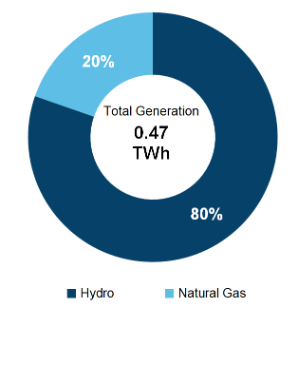
Figure 1: Electricity Generation by Fuel Type (2021)

Source and Description:
Source:
CER – Canada's Energy Future 2023 Data Appendix for Electricity GenerationDescription:
This pie chart shows electricity generation by source in Yukon. A total of 0.70 TWh of electricity was generated in 2021. -
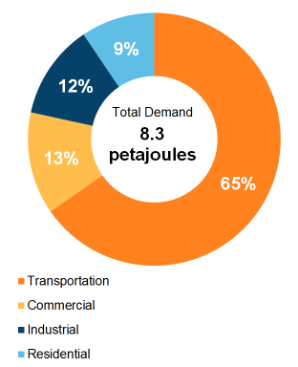
Figure 2: End-Use Demand by Sector (2020)
Source and Description:
Source:
CER – Canada's Energy Future 2023 Data Appendix for End-Use DemandDescription:
This pie chart shows end-use energy demand in Yukon by sector. Total end-use energy demand was 8.2 PJ in 2020. The largest sector was transportation at 52% of total demand, followed by industrial (at 25%), commecial (at 12%), and lastly, residential (at 11%). -
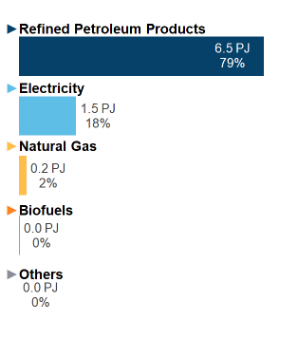
Figure 3: End-Use Demand by Fuel (2020)

Source and Description:
Source:
CER – Canada's Energy Future 2023 Data Appendix for End-Use DemandDescription:
This figure shows end-use demand by fuel type in Yukon in 2020. Refined petroleum products accounted for 6.4 PJ (78%) of demand, electricity at 1.6 PJ (20%), and natural gas at 0.2 PJ (2%). There was no end-use demand of biofuels or other.
Note: "Other" includes coal, coke, and coke oven gas. -
Figure 4: GHG Emissions by Sector
Source and Description:
Source:
Environment and Climate Change Canada – National Inventory Report 1990-2022Description:
This stacked column graph shows GHG emissions in Yukon by sector from 1990 to 2022 in MT of CO2 equivalent. Total GHG emissions have increased in Yukon from 0.55 MT of CO2e in 1990 to 0.66 MT of CO2e in 2022. -
Figure 5: Emissions Intensity from Electricity Generation
Source and Description:
Source:
Environment and Climate Change Canada – National Inventory Report 1990-2022Description:
This column graph shows the emissions intensity of electricity generation in Yukon from 1990 to 2022. In 1990, electricity generated in Yukon emitted 190 g of CO2e per kWh. By 2022, emissions intensity decreased to 70 g of CO2e per kWh.


Energy Production
Crude Oil
- Yukon does not have any commercial crude oil production.
- Although eight sedimentary basins in onshore Yukon have been identified as having crude oil potential of up to 752 million barrels in-place, no significant amount of crude oil has ever been produced.Footnote 1 Seventy-six wells have been drilled in Yukon from five of the eight basins. Most of these wells were drilled in the 1960s and 1970s. The most recent wells were drilled in the Eagle Plain Basin in 2012-2013.
- In December 2016, the federal government announced that Canadian Arctic offshore, including the federal waters offshore of Nunavut, is indefinitely off limits to new offshore oil and gas licensing, to be reviewed every five years through a climate and marine science-based life-cycle assessment.
- In 2019, the federal government issued an order, expiring at the end of 2021, prohibiting all oil and gas activities in the Canadian Arctic offshore, including activities associated with existing licenses.Footnote 2 This order was most recently amended on 8 December 2023 to extend the expiry date to 31 December 2028.Footnote 3
- In 2023, the “Report of the Western Arctic Review Committee” was issued.Footnote 4 This report was a science-based assessment of the risks and benefits of Arctic offshore oil and gas exploration and development.
- In 2023, the Government of Yukon signed the Western Arctic – Tariuq (Offshore) Accord along with the Inuvialuit Regional Corporation, Government of Northwest Territories, and Government of Canada.Footnote 5 This accord ensures that northerners will share in the co-management of offshore oil and gas activity.
Refined Petroleum Products (RPPs)
- There are no refineries in Yukon.
Natural Gas/Natural Gas Liquids (NGLs)
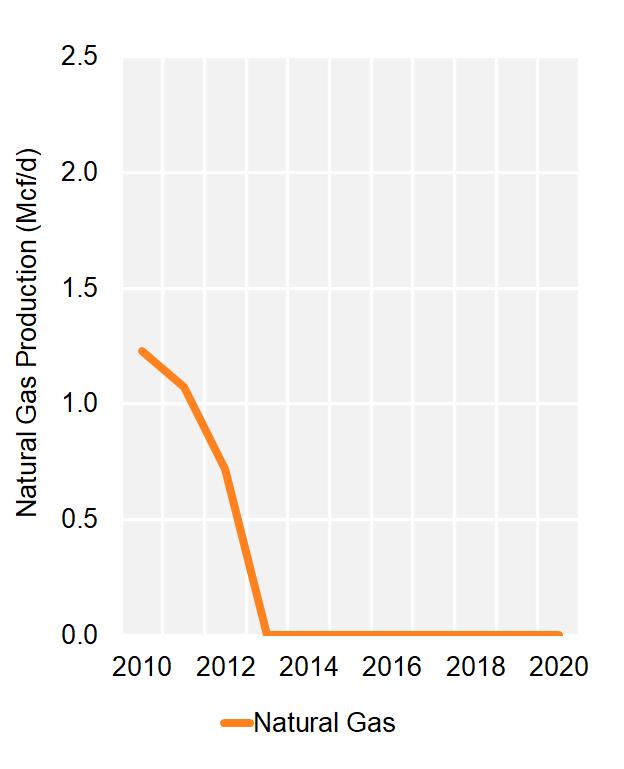
- There is currently no natural gas or NGL production in Yukon.
- Small volumes of natural gas were produced in the Kotaneelee field in southeastern Yukon until 2012, when production was suspended for economic reasons.
- Yukon’s in-place resources of conventional natural gas are estimated to be 17 trillion cubic feet (Tcf). In-place resources of dry gas in Devonian shales of southeast Yukon are estimated to be 68 Tcf.
Electricity
- In 2021, Yukon generated about 0.70 terawatt-hours (TWh) of electricity (Figure 1), which is approximately 0.1% of total Canadian generation. Yukon has an estimated generating capacity of 140 megawatts (MW).
- Yukon Energy Corporation is publicly owned and is the main generator and transmitter of electricity in Yukon.Footnote 6 It also sells wholesale to ATCO Electric Yukon, who then distributes the power to most Yukoners.
- ATCO Electric Yukon, a privately owned company, also contributes some power generation.Footnote 7 In addition to distributing power to customers, it owns and operates the 1.3 MW Fish Lake hydro plant near Whitehorse, generates power in five communities that are not connected to the territorial grid system and rely on diesel power, and operates six stand-by diesel generation facilities in the territory.
- Yukon generates most of its electricity from hydro. In 2021, hydroelectricity accounted for 72% of total generation. Yukon has four hydro plants with a total capacity of nearly 95 MW. The largest is the Whitehorse Hydro Facility, which can supply 40 MW of power in the summer and 25 MW in the winter when water flow in the Yukon River is reduced.Footnote 8 The Aishihik hydro plant, which produces about 25% of the total annual energy generated by Yukon Energy, is the only hydroelectric facility in Yukon that can store energy in the summer when demand is low to be used in the winter when demand is high.Footnote 9
- Generation from diesel and natural gas is used for periods of peak demand and as an emergency backup during years of low water at hydro facilities. Yukon relied primarily on diesel, but the lower cost of liquefied natural gas (LNG) in recent years has made investments in LNG facilities more economical. The 8.8 MW Whitehorse LNG power plant started operations in 2015 with two units. A third LNG unit was installed in 2018, bringing the total capacity of the Whitehorse LNG facility to 13.2 MW.Footnote 10
- A 4.0 MW wind project on Haeckel Hill near Whitehorse, which is northern Canada’s first 100% Indigenous-owned wind energy project, was completed in October 2023. The Haeckel Hill-Thay T’äw Wind Energy Project entered commercial operation in March 2024.Footnote 11
- A 0.48 MW solar array with battery is currently operating in the fly-in community of Old Crow.Footnote 12 Additionally, the 1.0 MW North Klondike solar power plant was completed in November 2021.Footnote 13 A 2.9 MW solar farm for the remote community of Watson Lake has also been proposed.
Energy Transportation and Trade
Crude Oil and Liquids
- Virtually all the refined petroleum products (RPPs) consumed in Yukon are produced in Alberta or B.C. Occasionally some small volumes are also imported from Alaska.
- There are no crude oil pipelines or crude-by-rail facilities in Yukon. Almost all RPPs are delivered to communities in Yukon by truck, except for deliveries to Old Crow. Old Crow, which has no road or ship access, can only receive fuels by airplane.Footnote 14
- The Canol 1 Pipeline was built to carry crude oil from Norman Wells, NWT, to a refinery in Whitehorse during World War II. The pipeline was constructed by the United States (U.S.) Army and operated for less than two years before removal. Three other crude and products pipelines were constructed as part of the Canol project and connected Whitehorse to the Alaskan cities of Skagway and Fairbanks.
Natural Gas
- There are no natural gas pipelines in the Yukon.
Liquefied Natural Gas (LNG)
- Whitehorse receives LNG by truck from facilities in Fort Nelson, BC (Cryopeak Energy Solutions, previously Ferus Natural Gas Fuels and Campus EnergyFootnote 15).Footnote 16 The LNG is stored and used at Yukon Energy’s Whitehorse facility for electricity generation.
- There are no proposed large-scale LNG facilities in Yukon.
Electricity
- Yukon is not connected to the North American electricity grid in B.C. There are also no transmission lines between Yukon and NWT or Alaska.
- The Yukon Integrated System is the territorial electricity grid. It has over 1,100 kilometres (km) of transmission lines that connect most of the territory to the predominant hydro, diesel, and LNG power plants.Footnote 17 Several communities are not connected to the grid and rely on diesel-fired generation for electricity.Footnote 18
- Yukon Energy owns and operates most of the transmission infrastructure, and directly serves 2,200 customers. ATCO Electric Yukon distributes power to 19,000 customers in 19 communities. The Yukon Utilities BoardFootnote 19 regulates both companies.
- In 2019, the Government of Canada committed to an investment of $16.5 million towards Yukon Energy’s construction of a grid-scale battery storage system.Footnote 20 The new battery is a 20 MW/40 megawatt-hour (MWh) battery. It is scheduled to be in service by winter 2024/25.
- Yukon’s Micro Generation Policy offers incentives for residential and commercial customers to produce electricity from renewable sources and sell the surplus to the grid.Footnote 21 By the end of 2023, the territory had 816 solar micro-generators connected to the grid with a combined capacity of 9.5 MW.Footnote 22
Energy Consumption and Greenhouse Gas (GHG) Emissions
Total Energy Consumption
- End-use demand in Yukon was 8.2 petajoules (PJ) in 2020. The largest sector for energy demand was transportation at 52% of total demand, followed by industrial at 25%, commercial at 12%, and residential at 11% (Figure 2). Yukon’s total energy demand was the second smallest in Canada and per capita energy demand was the fifth smallest in Canada.
- Mining is a significant driver of Yukon’s energy demand, and the opening and closing of mines can dramatically affect energy consumption.
- RPPs, including gasoline, diesel, and jet fuel, were the largest fuel type consumed in Yukon, accounting for 6.4 PJ, or 78% of total end-use demand. Electricity and natural gas accounted for 1.6 PJ (20%) and 0.2 PJ (2%), respectively (Figure 3).
- Yukon’s 2020 strategy for climate change, energy, and a green economy includes a target for the replacement of residential fossil fuel heating systems with electric systems, and to support the installation of 20 commercial and institutional bioenergy heating systems by 2030.Footnote 23
Refined Petroleum Products
- Yukon’s motor gasoline demand in 2022 was 1,761 litres per capita, 70% above the national average of 1,035 litres per capita.
- Yukon’s diesel demand in 2022 was 2,318 litres per capita, almost three times the national average of 772 litres per capita.
- Diesel makes up a majority of the RPPs consumed in the Yukon. A significant portion of this diesel demand is for power generation and heating in communities not connected to the electrical grid, and when hydroelectric generation is insufficient to meet power demands for those on the territorial grid.
Natural Gas
- Natural gas (stored as LNG) is used at Yukon Energy’s Whitehorse facility to generate electricity during peak winter demand or as backup for hydroelectric outages.
Electricity
- In 2020, annual electricity consumption per capita in Yukon was 10.6 MWh. Yukon ranked eighth in Canada for per capita electricity consumption and consumed 27% less than the national average.
- Yukon’s largest consuming sector for electricity in 2020 was residential at 0.20 TWh. The commercial and industrial sectors consumed 0.19 TWh and 0.06 TWh, respectively.
GHG Emissions
- Yukon’s GHG emissions in 2022 were 0.66 megatonnes of carbon dioxide equivalent (MT CO2e). Yukon’s emissions have increased 20% since 1990 and 18% since 2005.
- Yukon’s emissions per capita are 15.1 tonnes of CO2e. That is 17% below the Canadian average of 18.2 tonnes per capita.
- The largest emitting sectors in Yukon are transportation at 57% of emissions, industry and manufacturing at 24%, and electricity and buildings at 6% (Figure 4).
- In 2022, Yukon’s power sector emitted 0.04 MT CO2e emissions, which represents a very small fraction of Canada’s total GHG emissions from power generation.
- The greenhouse gas intensity of Yukon’s electricity grid, measured as the GHGs emitted in the generation of the territory’s electric power, was 70 grams of CO2e per kWh (g CO2e per kWh) electricity generated in 2022. This is a 9% decrease from the territory’s 2005 level of 64 g CO2e per kWh. The national average in 2022 was 100 g CO2e per kWh (Figure 5).
Energy Authorities
- Yukon Government: Energy, Mines and Resources
- Yukon Government: Retail Fuel Prices
- Yukon Utilities Board
- Yukon Energy: Annual Reports
- Yukon Government: Yukon Energy State of Play
- Yukon Government: Our Clean Future
- Yukon Energy: Current Energy Consumption
- CER–Canada's Renewable Power: Yukon
- Date modified: